
ZIP 75061 · Heritage District · Irving's most populous ZIP
Water Damage Restoration in East Irving, TX 75061
75061 is the most populous ZIP in Irving and contains the Heritage District — the city's original townsite and its oldest housing. Older buildings fail differently, and they need providers who have worked on them before.
- Irving's oldest housing stock
- 55,828 residents — the city's largest ZIP by population
- Pre-1980s materials need identifying before demolition
Referral service — calls are connected to independent restoration providers. Availability, pricing and licensing are the provider's responsibility.
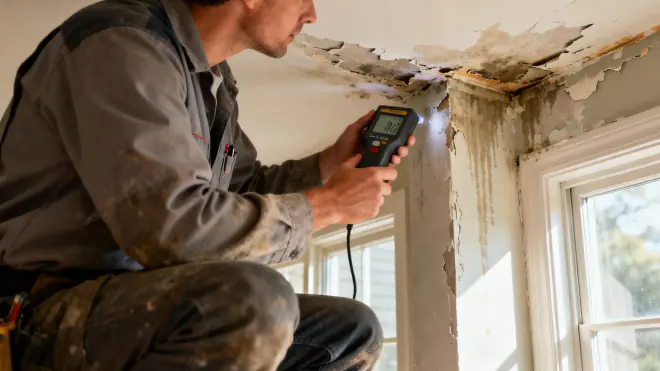
The 75061 profile
ZIP 75061 is Irving's most populous — 55,828 residents across 11.6 square miles and 20,274 housing units. It is also the city's most affordable by median household income at $63,798, with roughly 59% of occupied homes rented.
At its heart is the Heritage District, which the Greater Irving-Las Colinas Chamber describes as Irving's birthplace — a mix of old and new homes with walkable streets, locally owned dining, and a Trinity Railway Express stop providing rail access toward Fort Worth. The Irving Heritage House on South O'Connor Road anchors the area's preservation story.
What matters for restoration is the age. Irving's building boom was the 1980s, with roughly 20,000 homes built that decade. The Heritage District and its surrounding streets substantially predate that. Citywide, just over a thousand Irving homes date from 1939 or earlier, and a disproportionate share of them are here.
Why older buildings need a different approach
Restoration methods that work on a 1990s slab home are not automatically right for a house built decades earlier. Four differences matter.
Hazardous materials have to be identified first
This is the most important one and the most commonly skipped. Buildings from before the 1980s may contain asbestos-bearing materials — in floor tiles, tile adhesive, pipe insulation, textured ceiling finishes and sheet flooring backing — and lead-based paint. Water damage restoration involves cutting out drywall, lifting flooring and opening cavities, all of which disturb exactly those materials. A provider experienced in older Irving housing will raise testing before demolition rather than after. One who proposes immediate tear-out of a 1950s floor without mentioning it is a provider to question.
Plaster is not drywall
Older homes may have plaster over wood or metal lath rather than modern drywall. Plaster is denser, holds water differently and dries more slowly, which typically means specialty drying rather than ambient airflow. It is also considerably harder to patch invisibly, so the salvage decision carries more weight than it would on a drywall wall.
Original materials are worth saving
Original hardwood floors, solid timber trim and period fittings have real value and are frequently salvageable with specialty drying — floor drying mats can pull moisture up through solid hardwood caught early. Ask specifically whether salvage was considered before accepting a tear-out recommendation.
Plumbing may be at the end of its life entirely
Galvanised steel supply lines corrode from the inside and fail in multiple places once they start. Cast iron drain lines crack and offset. On a property of this age, a single failure is often a signal about the system rather than an isolated event, and it is worth asking a plumber to assess the whole run rather than just the break.
Geography: the Trinity and the creek channels
Irving's eastern edge runs against the Trinity River and its Elm Fork, and 75061 sits on that side of the city. Three local flood-control districts maintain FEMA-certified levees along the Elm Fork, and a National Weather Service hydrologist has pointed to the Elm Fork's contribution as the main driver of higher Trinity water levels in Dallas County once it joins the river on Irving's east side.
For most residential property the more relevant risk is interior drainage rather than the river itself. The city has been addressing it steadily: the West Irving Creek Channel project removed roughly 240 homes from 100-year flood risk, and in July 2026 the Texas Water Development Board approved $35.6 million for flood mitigation along North Delaware Creek, following around $115 million in earlier funding.
Two practical points. First, older neighbourhoods were frequently built before current drainage standards, so a street that handles ordinary rain can struggle in an intense downpour. Second — and this catches people out — standard homeowners insurance does not cover flood. Rising water needs separate flood cover, and NFIP policies carry a waiting period, so it is a decision for a calm day rather than a forecast. See storm and flood damage cleanup.
Seasonal pattern in 75061
Spring carries the most risk here. Hail reports around Irving peak March to June, and older roofs have less margin — a roof that was already near the end of its life does not need much hail to start letting water in during the May rains. If hail passed over the area, get the roof inspected before the next storm rather than after it.
Summer brings condensate and slow leaks. In older housing with original plumbing, a seep behind a cabinet can run through an entire summer unnoticed, which is how a plumbing problem becomes a mold problem.
Winter is the freeze risk, and older housing is more exposed. Pipe runs in unconditioned attics and along exterior walls, often with insulation that has degraded over decades, are exactly what a multi-day hard freeze finds. February 2021 produced over 500,000 winter-storm claims across Texas, mostly for frozen and burst pipes, concentrated in the Houston and Dallas–Fort Worth areas.
In a rental — and most of 75061 is rented — report any freeze preparation concerns to the landlord in writing before winter rather than after a burst. A written record beforehand changes the conversation afterwards.
Available here
Restoration services across East Irving
All services are available across 75061. Older plumbing, older roofing and older building materials shape most of the water damage work in this area.
- Emergency Water ExtractionStanding water pumped out first
- Structural Drying & DehumidificationDrying what the pump can't reach
- Burst Pipe Water DamageSupply lines, freezes and slab leaks
- Ceiling Water Damage RepairStains, sagging and upstairs leaks
- Storm & Flood Damage CleanupCreek rise, roof and wind-driven rain
- Sewage Backup CleanupCategory 3 water, handled safely
- Fire & Smoke Damage RestorationSoot, char and odour
- Mold Removal & RemediationTexas-licensed remediation rules
- Biohazard CleanupTrauma, hoarding and contamination
ZIP codes covered on this page
- 75061
Nearby areas we also cover
- South IrvingZIP 75060, directly south-west
- North IrvingZIP 75062, directly north
- Las ColinasZIP 75039 & 75038, to the north-west
The age of the housing changes the method but not the principles. Our main water damage page for Irving covers the symptom guide, the process and the questions worth asking before work starts. See the full Irving coverage list, including every campaign ZIP code.
Water damage in an older East Irving home?
Mention the approximate age of the property so hazardous-material checks are planned in from the start.
Local FAQ
East Irving water damage questions
My house is older. Does that change the restoration work?
Significantly. Pre-1980s buildings may contain asbestos-bearing materials and lead paint in exactly the places restoration disturbs — floor tiles and adhesive, pipe insulation, textured ceilings. Those need identifying before any demolition. Plaster walls dry more slowly than drywall and usually need specialty drying. Original hardwood and timber trim are often worth saving rather than replacing. A provider experienced in older Irving housing should raise all of this themselves.
Should I worry about asbestos during water damage repair?
It is worth asking about on a pre-1980s property, yes. Asbestos is only a hazard when disturbed — and cutting out wet drywall, lifting flooring and opening cavities is exactly that. The answer is not to panic but to test before demolition. A provider who proposes immediate tear-out in a house of that age without mentioning it has skipped a step.
Is 75061 at flood risk from the Trinity?
East Irving sits on the Trinity and Elm Fork side of the city, with three flood-control districts maintaining FEMA-certified levees. For most homes the more relevant risk is interior drainage during intense rainfall, which the city has been investing in — West Irving Creek Channel removed around 240 homes from 100-year flood risk, and North Delaware Creek received $35.6 million in state funding in July 2026. Check the FEMA Flood Map Service Center for your specific address, and remember standard homeowners policies exclude flood.
My landlord is slow to respond to a leak. What can I do?
Shut the water off if you safely can — that does not need anyone's permission and it stops the loss growing. Report in writing immediately, by email or the management portal, so there is a timestamp. Photograph everything before anything is moved. Keep a dated log of every attempt to contact them. Texas tenants have specific repair-request rights under the Property Code, so if it continues, look those up or get advice — and your own renters policy covers your contents regardless of who is at fault for the building.
Is the Heritage District covered on this page?
Yes. The Heritage District — Irving's original townsite, around the Irving Heritage House on South O'Connor Road and the TRE rail stop — sits within 75061 and is covered here, along with the surrounding east Irving neighbourhoods. If your property has historic status or sits in a preservation area, mention it when you call, because it may affect what can be replaced and how.
Still not sure what you are dealing with? Describe it on the phone and we will point you the right way — (469) 960-7264.
Talk to someone now
Water damage in East Irving?
Describe what has happened and where you are in 75061. We will connect you with an independent restoration provider covering this part of the city.
(469) 960-7264Referral service — calls are connected to independent restoration providers. Availability, pricing and licensing are the provider's responsibility.