
Soot · smoke odour · firefighting water
Fire & Smoke Damage Restoration in Irving, TX
The fire stops when it is extinguished. The damage does not. Soot is acidic and keeps etching metal, glass and finishes by the hour, and the water used to put the fire out starts its own clock the moment the hoses stop.
- Soot, char and smoke odour
- Firefighting water is its own water loss
- Acidic residue keeps damaging surfaces
Referral service — calls are connected to independent restoration providers. Availability, pricing and licensing are the provider's responsibility.
What fire damage restoration covers
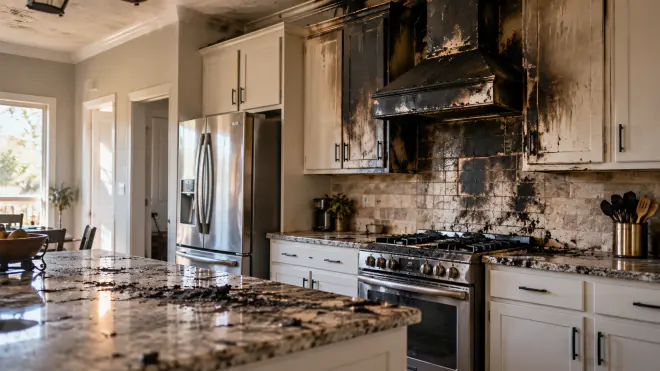
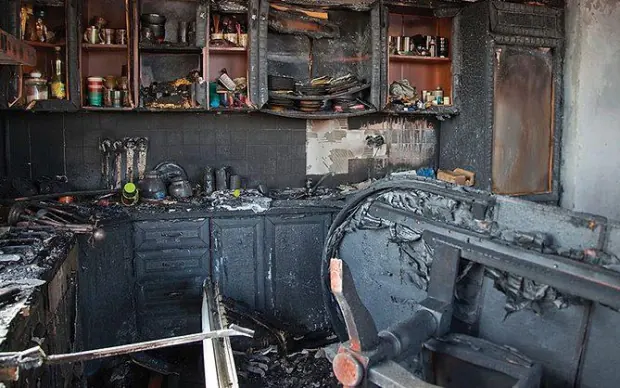
Fire damage restoration is the cleaning and repair of the damage left after a fire: soot and smoke residue, odour embedded in porous materials, charred structure, and the water used to extinguish it. It is routinely several jobs running at once, which is why fire losses are among the most complex restoration work there is.
The part people do not anticipate is the water. Extinguishing a fire puts a very large volume of water into a building in a short time, and that water behaves exactly like any other water loss — it soaks into drywall and insulation, runs across the slab, gets under cabinets and starts a mold clock. A fire-damaged property that is not dried properly develops a mold problem on top of everything else. That is why extraction and structural drying usually begin before soot cleaning does.
The second thing people do not anticipate is the reach. Smoke travels wherever air travels — through the HVAC system, under doors, into wall and ceiling cavities, up stairwells. A contained kitchen fire routinely leaves smoke residue and odour across the entire property, and in multi-family buildings, into neighbouring units.
Why soot has to be handled by type
Soot is not one substance and the cleaning method is not one method. Using the wrong approach does not merely fail — it sets the damage permanently. This is the main reason wiping at soot yourself tends to make things worse.
Dry smoke — fast, hot-burning fires
Powdery and relatively dry residue from a fast, high-temperature fire, typically paper or wood. It sits on surfaces rather than bonding to them and is usually removed with dry sponges and vacuuming before any wet cleaning. Introducing moisture first turns the powder into a smear that is then forced into the surface.
Wet smoke — slow, smouldering fires
Thick, sticky, strongly odorous residue from a low-temperature smouldering fire, typically plastics and synthetics. It bonds to surfaces and smears badly. It needs solvent-based cleaning and considerably more labour, and it carries the most persistent odour.
Protein residue — kitchen fires
From burnt food and organic material. Often nearly invisible — a faint yellowish film — but with an extremely strong, persistent smell. People frequently miss it entirely because there is little to see, then cannot work out why the kitchen still smells months later. It requires degreasing agents and thorough coverage.
Fuel and oil residue
From a furnace puff-back or oil-burning equipment. Heavy, greasy and difficult, and it spreads through the HVAC system fast.
Soot is acidic. Left on surfaces it progressively etches and stains — metal fixtures tarnish and corrode, glass and mirrors etch permanently, grout and natural stone discolour, and plastics yellow. Within days some of that becomes irreversible. This is the reason fire restoration is urgent even when the structure looks stable.
Smoke odour: why it comes back
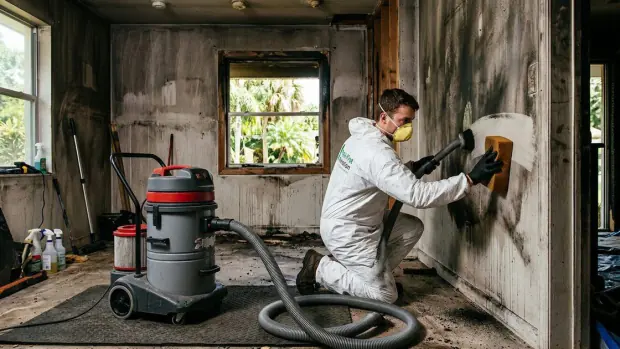
Smoke odour is the complaint that outlasts every other part of a fire loss, and the reason is that odour molecules are extremely small and lodge inside porous materials — drywall, insulation, carpet, upholstery, timber framing, HVAC ductwork. Cleaning surfaces addresses what you can see. It does not reach what is inside the material.
The pattern that frustrates people is this: the property is cleaned, it smells acceptable, and then on the first warm humid day the smell returns. Heat and humidity drive the trapped molecules back out of the material. The odour was never removed — it was temporarily masked.
Proper odour treatment is layered, and each layer does something the others cannot:
- Remove the source. Charred material, soot-saturated insulation and unsalvageable porous contents come out. Nothing else works while the source remains.
- Clean every surface, including inside cabinets, on top of door frames, and in cavities that were opened.
- Clean the HVAC system and replace filters. Ductwork is a reservoir that recontaminates the whole property every time the system runs.
- Treat the air and surfaces — hydroxyl generators, ozone (in unoccupied spaces only) or thermal fogging, depending on severity and whether the building is occupied.
- Seal residual odour with a sealing primer on framing and substrates before rebuilding, where odour persists in the structure.
Be sceptical of any proposal that is only the last step. Sealing over an unaddressed source is a temporary measure that fails, usually in summer.
How fire restoration runs
Release and safety assessment
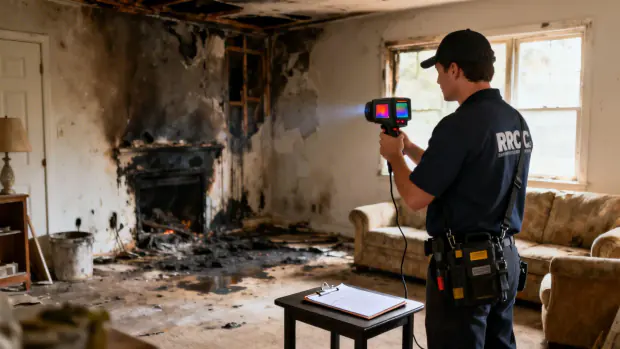
Nothing starts until the fire service releases the property. Structural stability, electrical safety and air quality assessed first.
Secure the structure
Board-up and temporary roof covering so weather and unauthorised access do not add to the loss.
Water extraction and drying
Firefighting water removed and the structure dried. This runs first and in parallel, because the mold clock is already running.
Debris and unsalvageable removal
Charred material, destroyed contents and soot-saturated porous materials removed, with an inventory recorded for the claim.
Soot removal by residue type
Dry methods before wet, matched to the residue — dry, wet, protein or fuel oil.
Contents handling
Salvageable items cleaned on site or taken off site for specialist cleaning. Everything inventoried.
Odour treatment
HVAC cleaning, air and surface treatment, and sealing where odour persists in the structure.
Reconstruction
Rebuilding what was removed. On a significant fire this is the longest phase by a wide margin.
Fire claims and what to expect
Fire is one of the losses standard homeowners policies are clearly built to cover, which makes the coverage question simpler here than with water or flood. The complications are practical rather than definitional.
- Additional living expenses. Most policies cover accommodation and reasonable extra costs while the property is uninhabitable. Ask about this on day one and keep every receipt — people routinely underclaim it.
- Contents inventory. You will need to itemise what was lost, which is an enormous task after a significant fire. Photograph everything before it is removed, and ask the provider for their disposal inventory.
- Smoke damage beyond the fire room. Damage in rooms the fire never reached is still fire damage. Do not let it be overlooked because the room looks visually fine — odour and residue count.
- Water damage from firefighting. Part of the fire claim, not a separate water claim.
- Mitigation obligation. Securing the property and starting drying are usually required steps, not optional ones.
- Read what you sign. Fire restoration agreements frequently include a direction-to-pay or assignment of benefits. That can be convenient — just know you are signing it.
In a multi-family building, smoke that reached neighbouring units involves the building's policy and the other residents' policies as well. Document the extent of smoke travel early.
What survives a fire and what does not
| Item | Typical outcome | Notes |
|---|---|---|
| Hard non-porous surfaces | Usually cleaned | Tile, glass, metal and sealed stone clean well if treated before acidic etching sets. |
| Clothing and textiles | Often restorable | Specialist ozone or hydroxyl laundering removes odour that domestic washing does not. |
| Upholstered furniture | Case by case | Depends on residue type and depth. Wet smoke penetration often makes it uneconomic. |
| Mattresses and pillows | Normally disposed of | Deeply porous, in close contact with faces, rarely worth restoring. |
| Electronics | Specialist assessment | Acidic soot inside a device continues corroding it. Do not power anything on until checked. |
| Documents and photographs | Specialist only | Freeze-drying and specialist cleaning exist. Expensive, so reserved for irreplaceable items. |
| Food and medication | Discarded | Including sealed containers and refrigerated items. Smoke and chemicals penetrate packaging. |
| Insulation in affected areas | Removed | Holds odour indefinitely and is cheap to replace. |
| Charred structural timber | Engineer assessment | Surface charring is sometimes acceptable after cleaning; loss of section is not. |
Do not wipe soot with a dry cloth — it drives residue into the surface and often sets the stain permanently. Do not use household cleaners on soot; several react badly with the residue. Do not switch on electronics or the HVAC system until both have been checked, because running the HVAC distributes soot through every duct in the property.
Property released by the fire service?
Soot keeps etching surfaces by the hour. The sooner cleaning starts, the more is saved.
FAQ
Fire and smoke damage questions
Why is there water damage after a fire?
Because extinguishing a fire puts a very large volume of water into the building quickly. That water soaks into drywall, insulation and flooring exactly like any other water loss and starts a mold clock immediately. This is why extraction and structural drying normally begin before soot cleaning — if the building is not dried, you end up with a mold problem on top of the fire damage.
Can smoke odour be removed completely?
Usually yes, but only by addressing the source rather than masking it. That means removing charred and soot-saturated porous material, cleaning every surface including cavities and ductwork, treating air and surfaces, and sealing substrates where odour persists. Treatments applied without source removal fail — typically returning on the first warm, humid day, when heat drives trapped odour molecules back out of the material.
How long does fire restoration take?
It varies enormously with severity. A contained kitchen fire with smoke through the property might be two to four weeks of cleaning and odour work plus reconstruction. A significant structural fire runs for months, and reconstruction dominates that timeline. Drying happens first and fast; rebuilding is what takes the time. Ask for the two phases quoted separately.
Should I start cleaning before the restoration crew arrives?
Please don't, beyond removing undamaged items from unaffected areas. Wiping soot drives it into surfaces and frequently sets the stain permanently, and household cleaners can react badly with the residue. The method depends on whether the residue is dry, wet, protein or fuel-based, and getting that wrong converts a cleanable surface into one that needs replacing.
Is the property safe to enter after a fire?
Not until the fire service releases it, and even then carefully. Risks include structural instability, compromised electrical systems, lingering hot spots, and air quality — smoke residue contains combustion by-products that are genuinely harmful to breathe. If you must retrieve essential items, go in only once the property has been cleared, and keep it brief.
Will my insurance cover smoke damage in rooms the fire never reached?
Normally yes. Smoke and soot damage is fire damage regardless of which room it ended up in, and smoke travels through HVAC systems, under doors and into cavities well beyond the fire itself. Make sure the adjuster's scope covers the whole affected area, including odour treatment and HVAC cleaning — a room that looks visually fine but smells of smoke is damaged, and should be documented as such.
Still not sure what you are dealing with? Describe it on the phone and we will point you the right way — (469) 960-7264.
Related work
Services that often come with this one
Fire losses are almost always water losses too, and smoke damage frequently extends well beyond the room the fire was in.
Fire losses are water losses too, which is why the two sit together. Water damage help in Irving covers the extraction and drying side in more depth than this page does.
- Emergency Water ExtractionStanding water pumped out first
- Structural Drying & DehumidificationDrying what the pump can't reach
- Biohazard CleanupTrauma, hoarding and contamination
- Ceiling Water Damage RepairStains, sagging and upstairs leaks
Where we cover in Irving
Fire damage calls come from every part of Irving. Multi-family buildings bring the added complication of smoke travelling between units.
Talk to someone now
Fire or smoke damage in Irving?
Once the property has been released by the fire service, call. We will connect you with an independent restoration provider covering your ZIP code.
(469) 960-7264Referral service — calls are connected to independent restoration providers. Availability, pricing and licensing are the provider's responsibility.